

National Civil Rights Museum – Memphis, TN
The National Civil Rights Museum in Memphis isn’t just another stop on a history tour. You feel that the second you see it. The museum is built into the former Lorraine Motel, the exact place where Dr. Martin Luther King Jr. was assassinated. That knowledge hangs over everything, and it adds a constant, quiet weight to the experience.
First Look
When you walk up, the first thing you notice is how much of the motel has been preserved. The turquoise doors and railings, the vintage cars parked out front, the balcony with the wreath marking the spot where Dr. King stood on April 4, 1968.

It looks frozen in time. As a visitor, you can stand there and see the place marker for his room and even look into the space where he stayed. It isn’t staged as some over-the-top set piece. It feels like a moment that was simply… interrupted.

Inside, the museum walks you through hundreds of years of history instead of dropping you straight into 1968. The story starts with slavery and the Atlantic slave trade, then moves forward through Reconstruction, Jim Crow, and the long, grinding fight for basic human rights.

The galleries are dense in the best possible way. There are timelines, artifacts, photos, videos, and interactive stations everywhere you turn. It’s not the kind of place you “skim.” If you actually stop to read, listen, and watch, you can easily spend hours just moving from panel to panel.
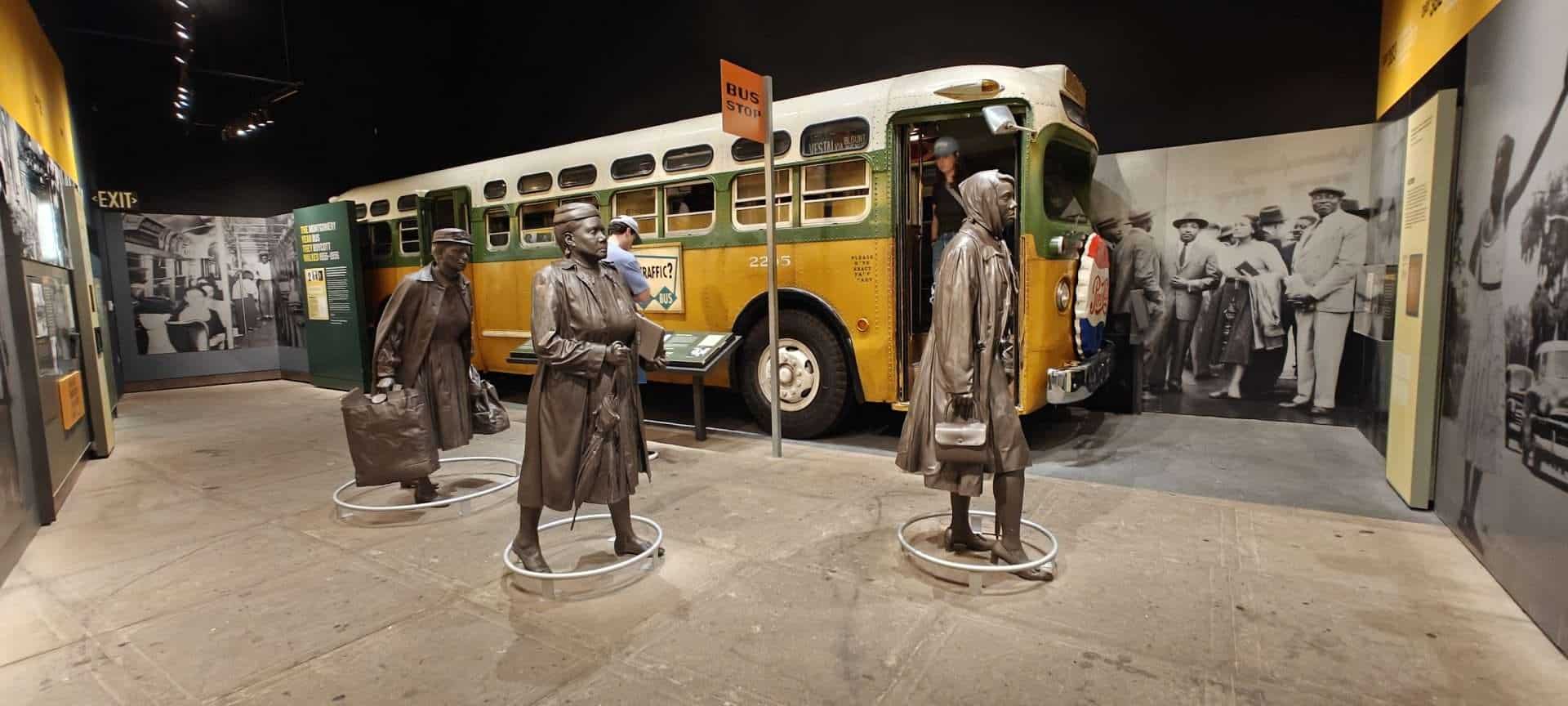
Some of the most powerful sections are the ones that put you physically “inside” key moments. You step onto a bus and watch the scene unfold around Rosa Parks as she refuses to give up her seat.
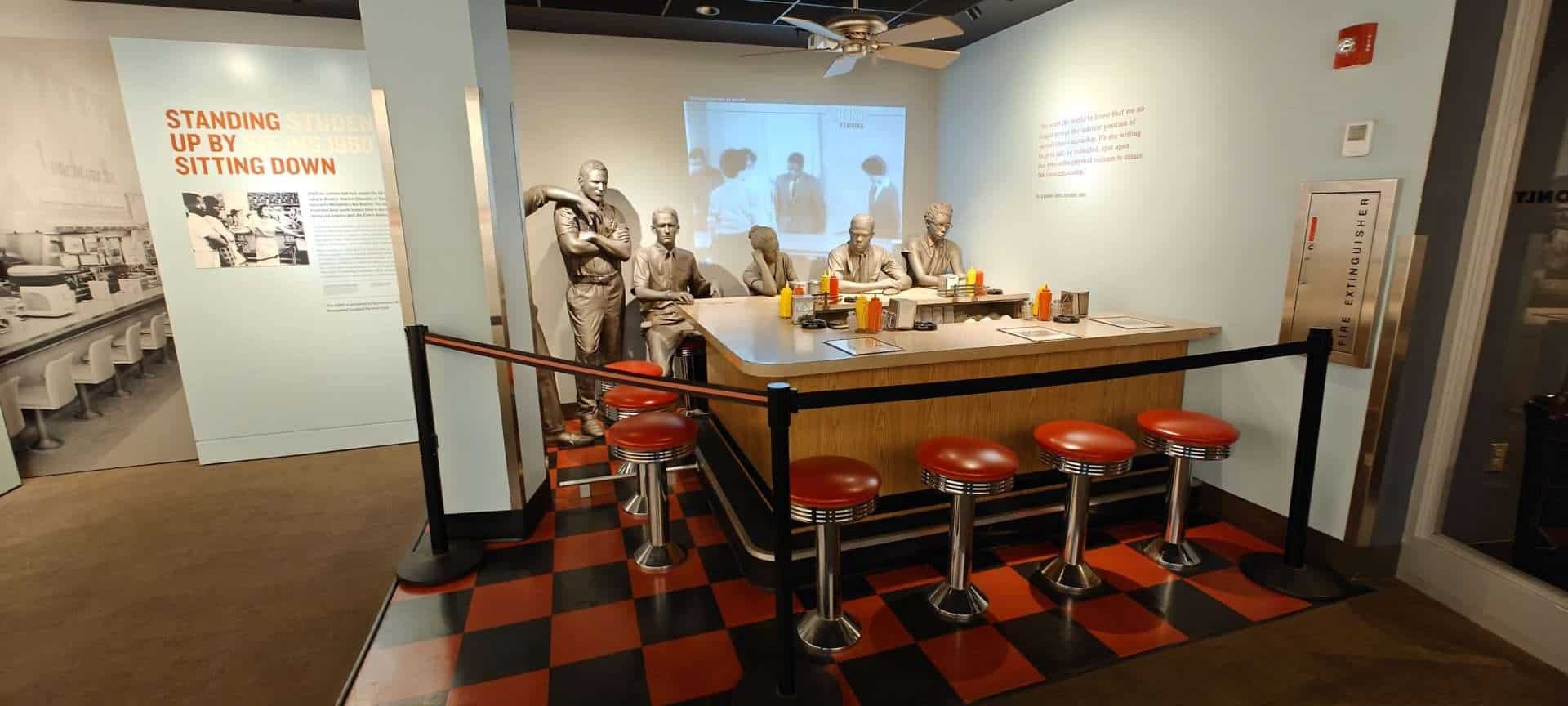
You stand at a lunch counter with sit-in protesters while angry faces close in around them.
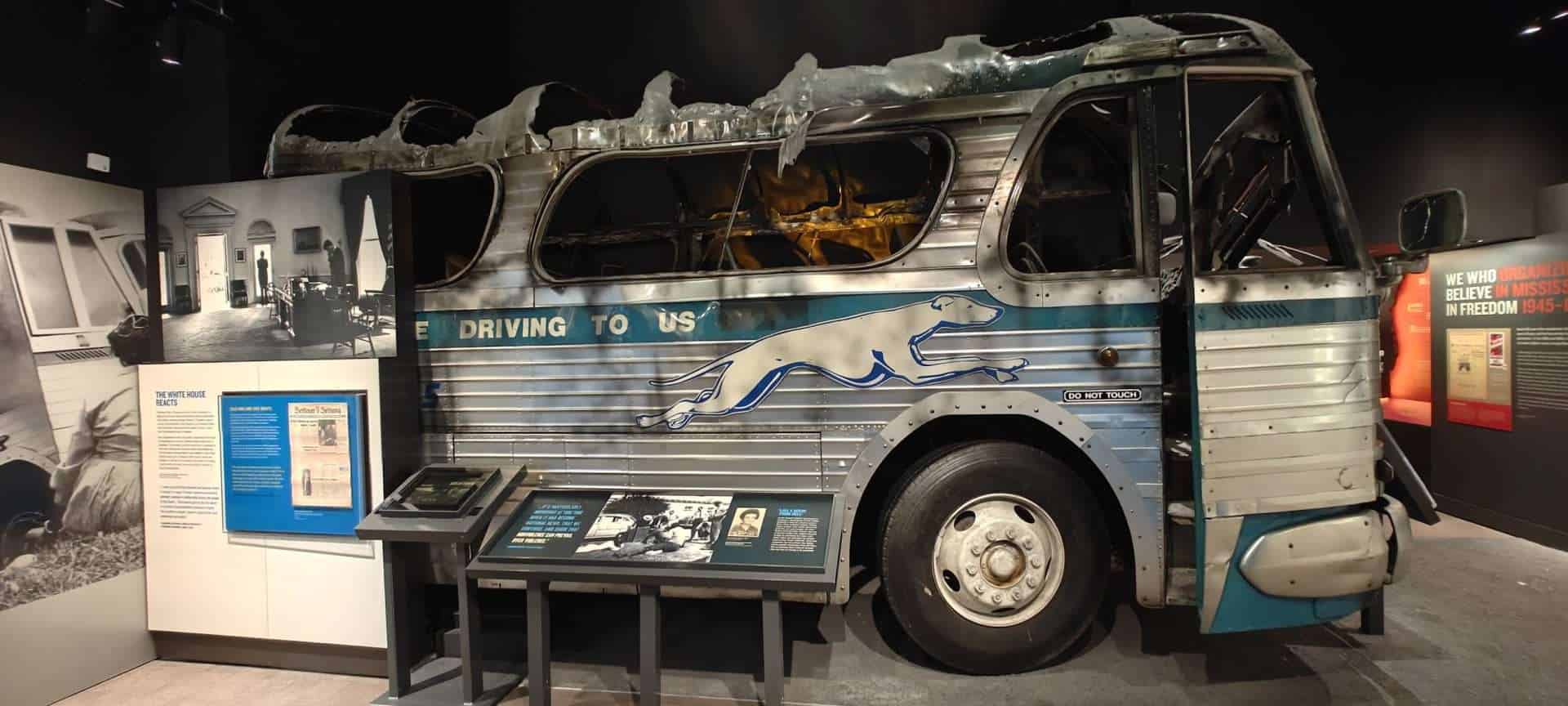
You walk past a burned-out Freedom Riders bus and are reminded that these weren’t abstract debates; people were beaten, jailed, and killed for doing things as simple as riding a bus or trying to eat at a restaurant.
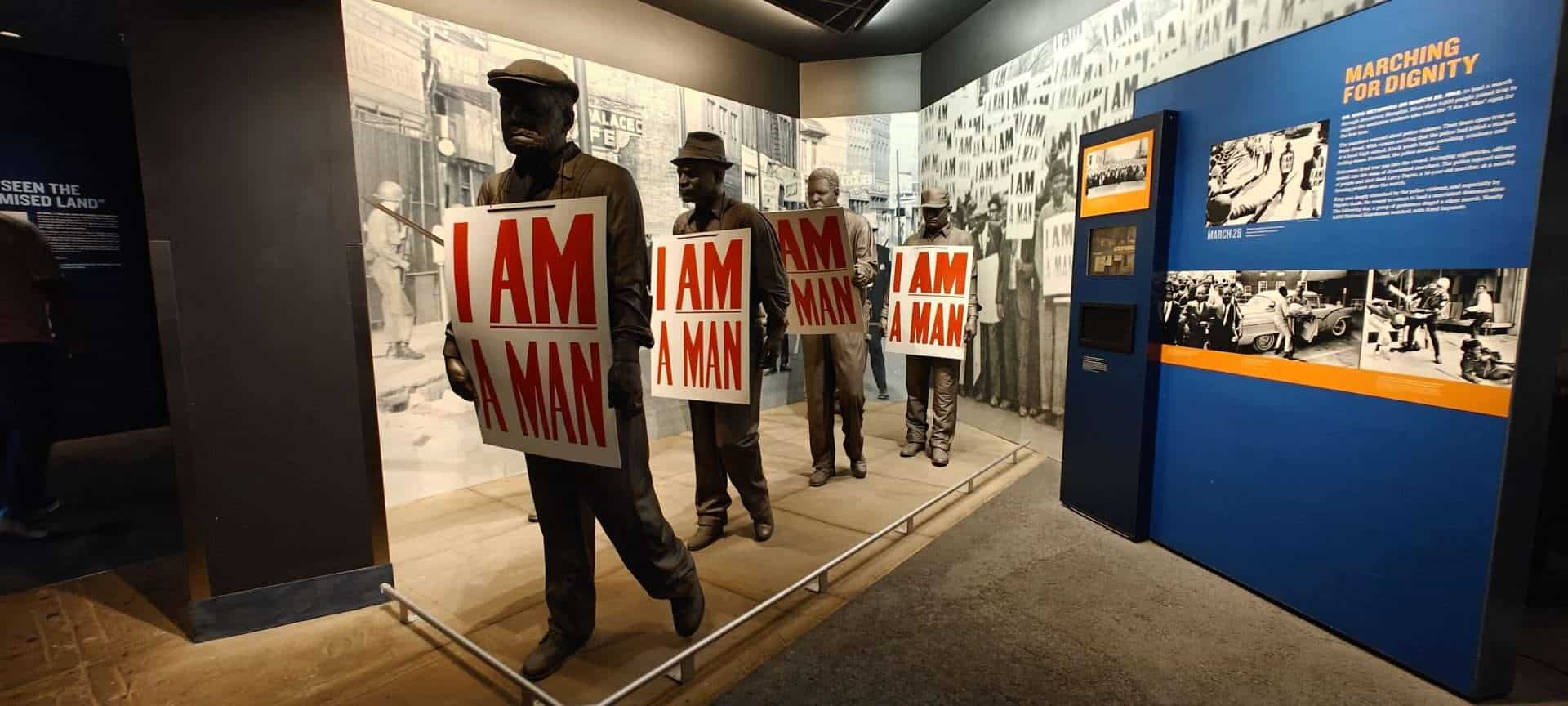
Later in the museum, you reach the Memphis sanitation workers’ strike, the “I AM A MAN” signs, and the reason Dr. King was in Memphis in the first place. You see the garbage truck, the workers, and the context that led to that final trip. By the time you get to King’s last days and the recreation of his room, the assassination isn’t just a famous news clip you’ve seen a hundred times. It’s the abrupt end of a long, painful, very human story you’ve just spent hours walking through.
The museum experience doesn’t end inside the motel walls. If you walk across the street and up the grassy area facing the building, you’ll find more interpretive material that deals with the shooting itself: maps of how the area looked in 1968, lines of sight, and information about where the shooter was, according to the official investigation. Standing there, looking back at the balcony from across the street, you get a physical sense of the distance, the angles, and how close everything really was. It’s one thing to see it diagrammed in a book. It’s another to stand on the ground where it happened and look back at that balcony.
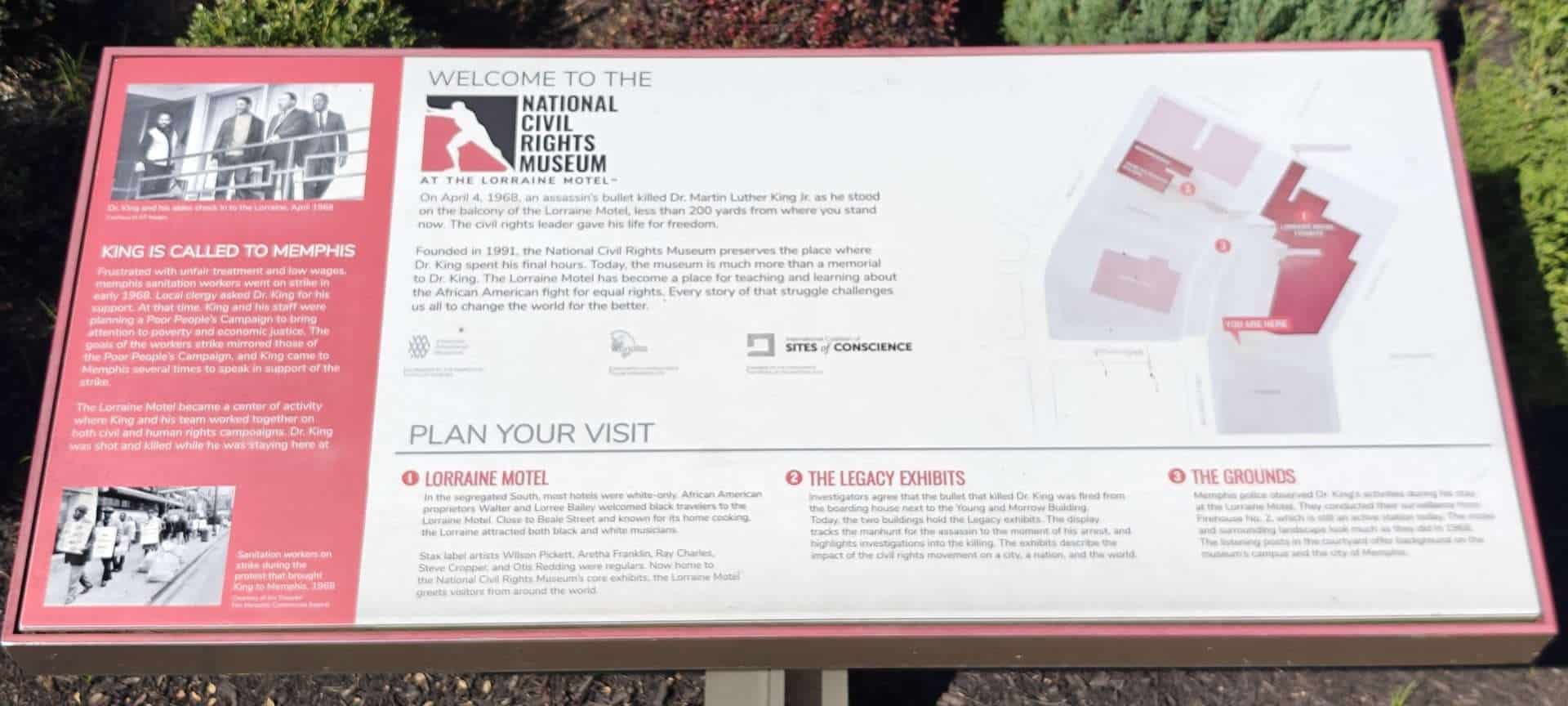
Overall, the museum is incredibly informative, but it’s not light reading. If you try to do it justice, it takes time. This is a place where you want to slow down and actually read the displays, listen to the audio, and watch the short films instead of rushing to the “big moment” at the end. You’re constantly walking a line between learning something new and being emotionally drained by what you’re learning.
If you go, plan for at least a few hours. Wear comfortable shoes, expect crowds around the balcony area, and be ready for some emotional whiplash. There are moments of unbelievable cruelty on the walls, but there are also stories of courage and resistance that are honestly inspiring.
By the time you step back outside and look up at the Lorraine Motel sign one more time, you’re very aware of how far we’ve come, how far we haven’t, and how much of that struggle is still echoing through the present.
It’s not a “fun” museum, but it’s a necessary one. And if you give it the time and attention it deserves, it will stay with you long after you walk away.


